
CASE STUDY
Urban Edible Garden at Santa Monica Proper
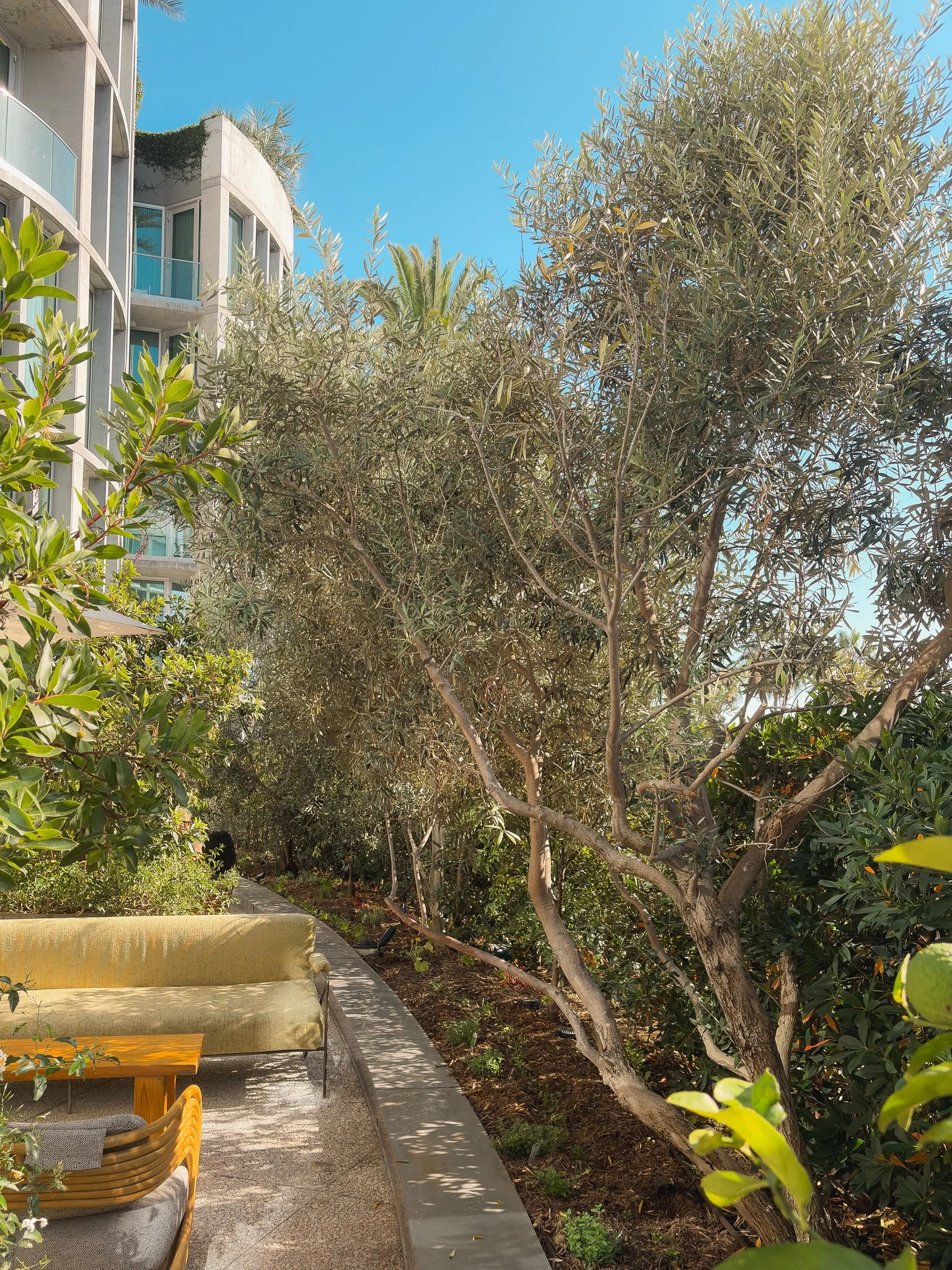
Not many hotels have the resources to grow food. Installation is the easy part—like all living things, a garden needs maintenance, so for an edible garden to thrive and be a worthwhile line item, the ideal internal champion is the chef.
When Santa Monica Proper’s new Executive Chef expressed interest in sourcing ingredients from regenerative farms, I was called in. He did not know I had already been proposing edible garden installations for Proper’s culinary and wellness programming. The vision was to produce hyperlocal food experiences in hotel common spaces.
FROM ORNAMENTALS TO EDIBLES
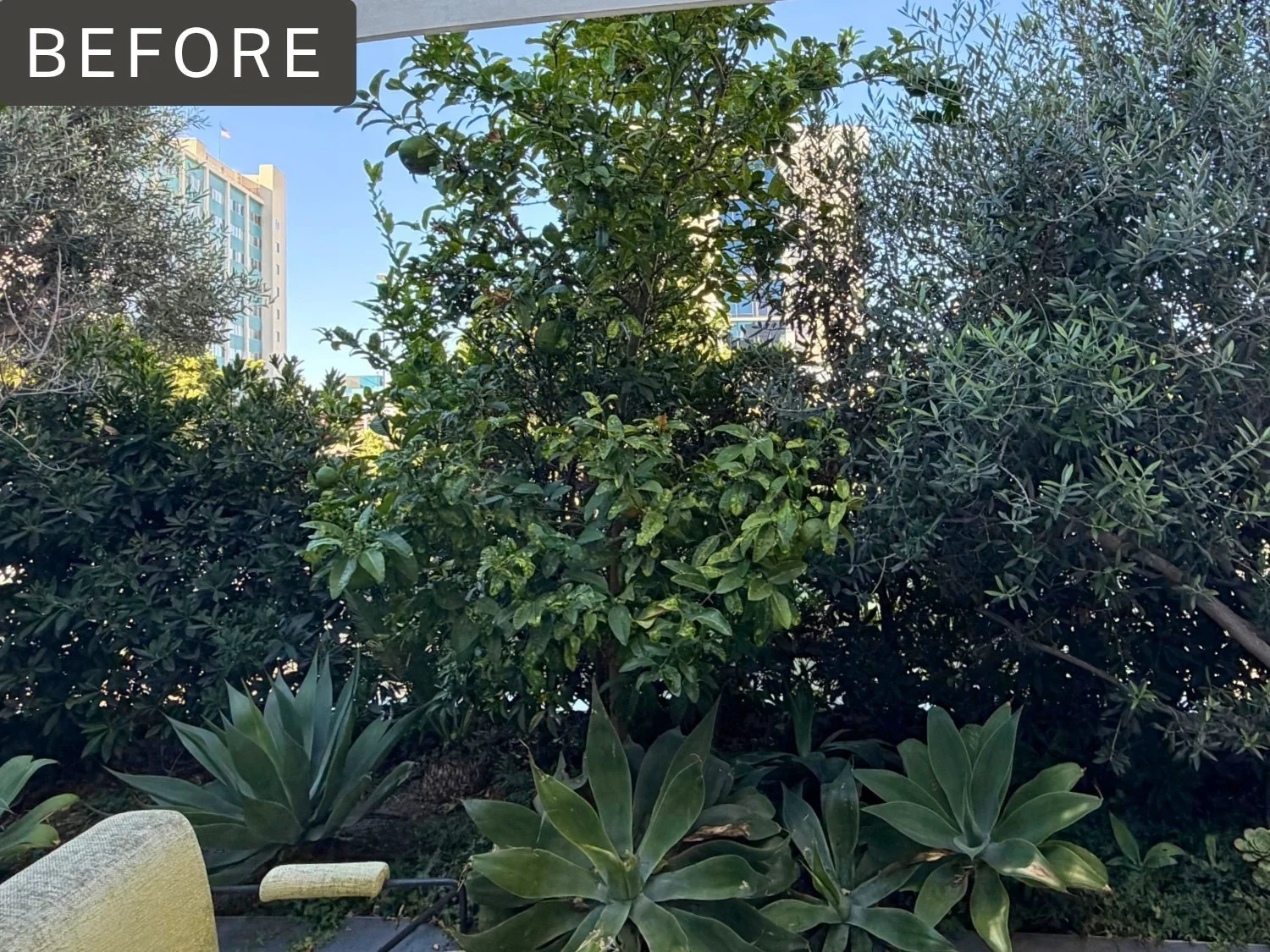
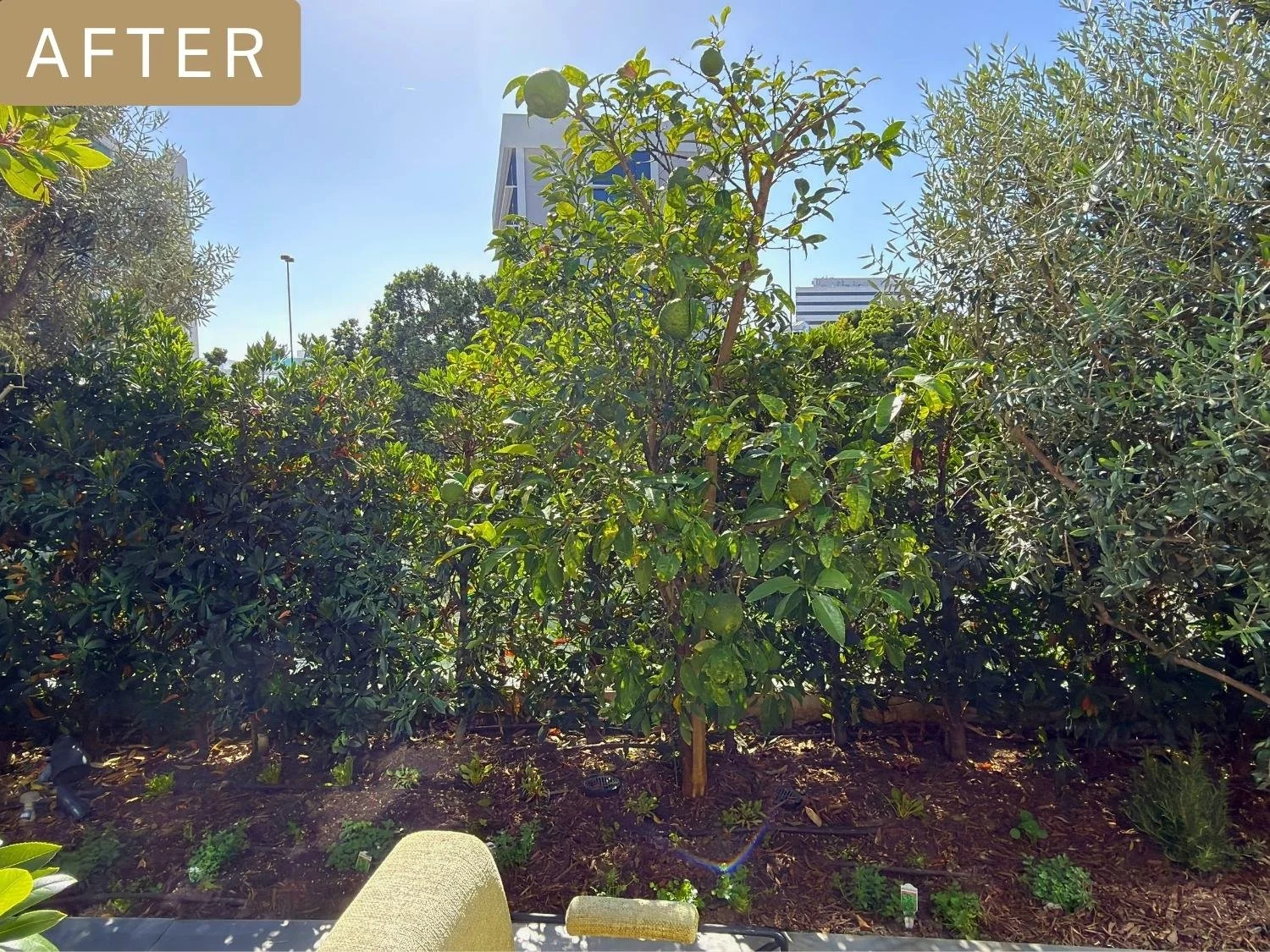
Grow food where guests gather
When we all met, the property’s general manager suggested Olea Terrace on the second floor where an existing bed ran along a perimeter wall. It was the perfect location.
Because the terrace hosts yoga classes, morning coffee and plenty of weddings, and sits between the fitness studio and wellness lounge, people walk past it all day and can learn where some of their food comes from.
High-visibility location matters.
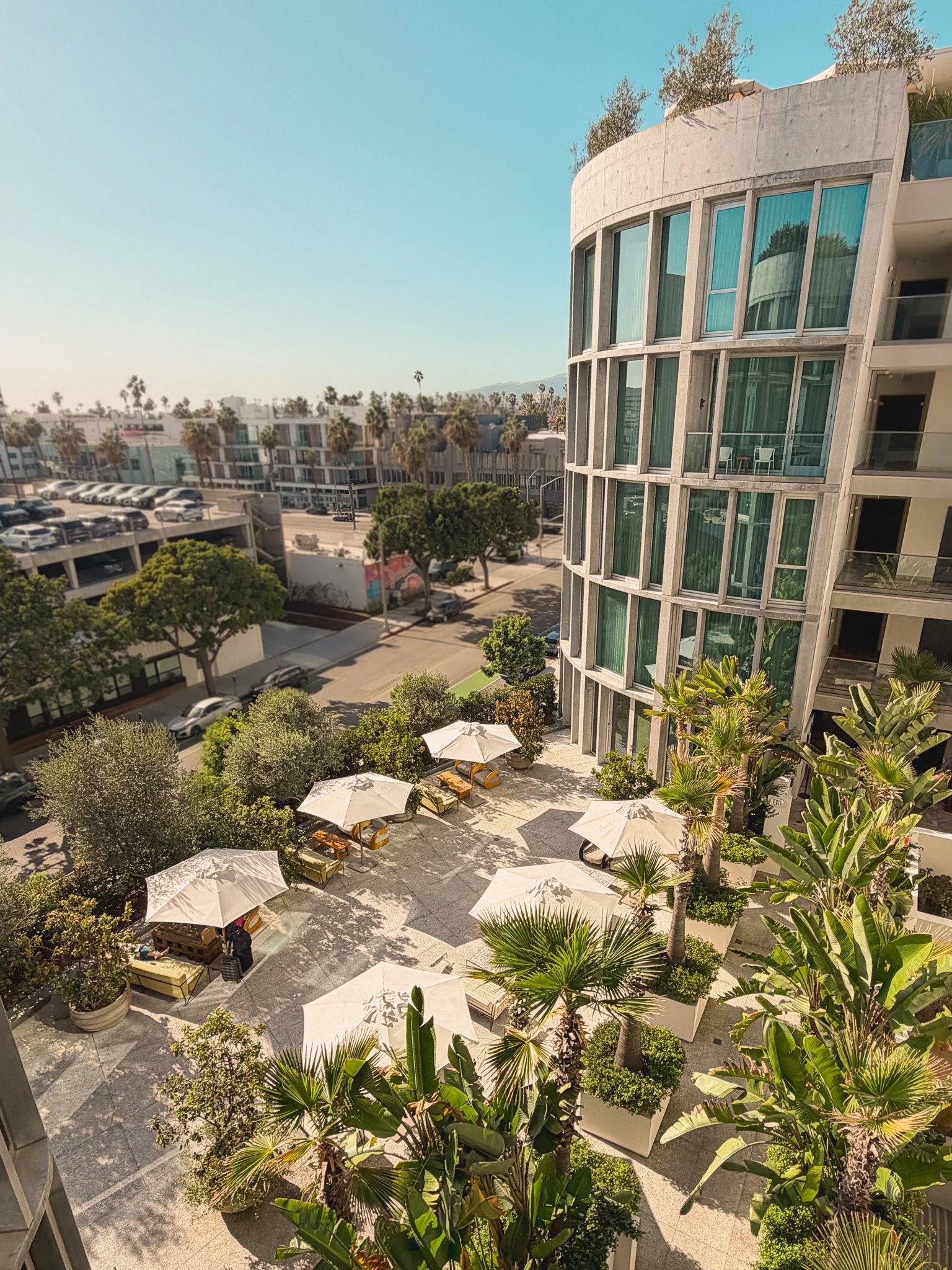
Garden planning: good, better, best
I’m grateful that biophilic design is everywhere right now. Greenery is beautiful, calming, and vital for the air we breathe. Any garden is a good start.
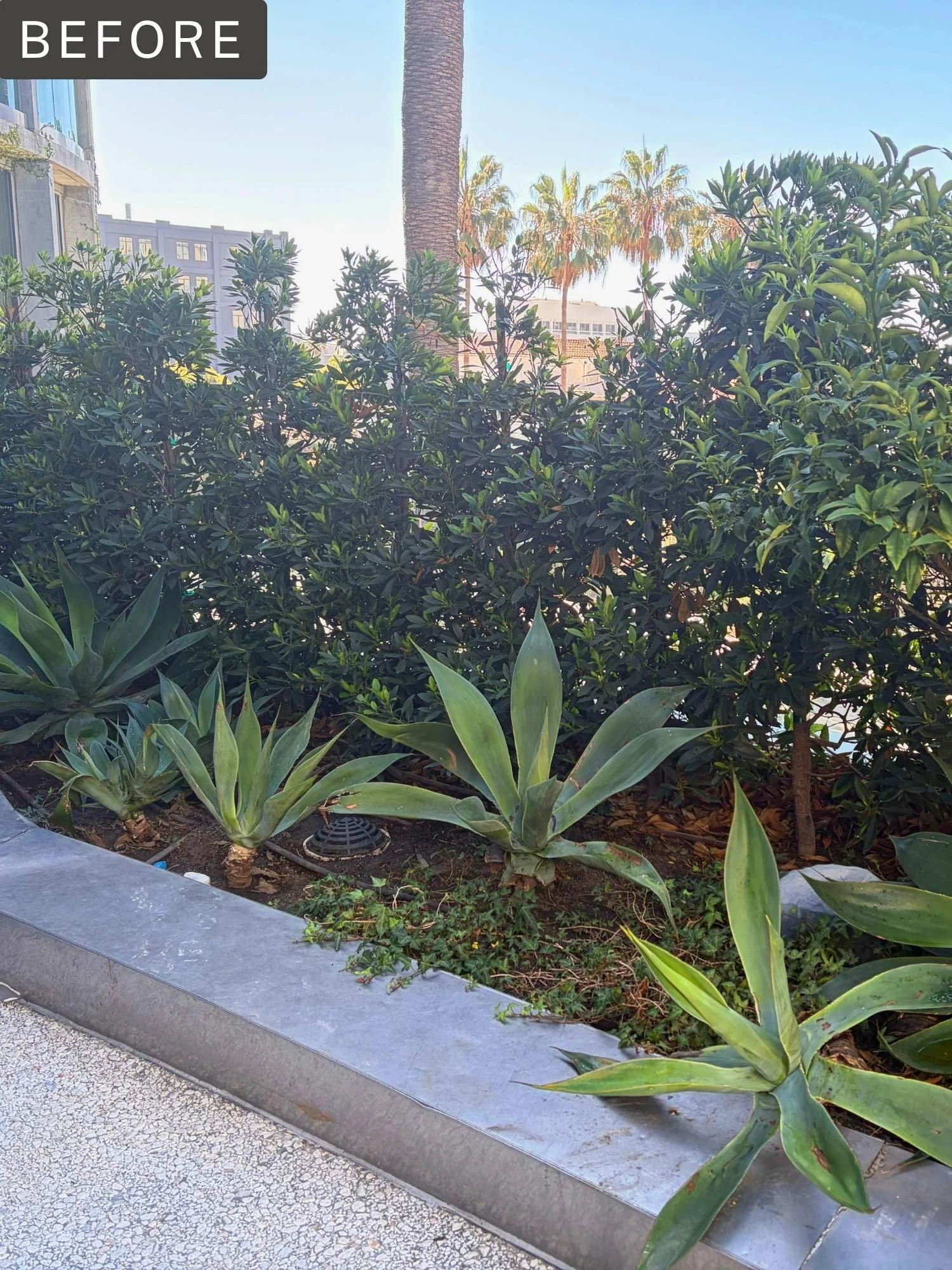
Santa Monica Proper’s existing bed was better than most. It features drought-tolerant olive trees, agaves, succulents, and a hedge that screened the tall buildings across the street. To everyone’s surprise it also housed four citrus trees in need of a little extra care. I even spotted a butterfly.
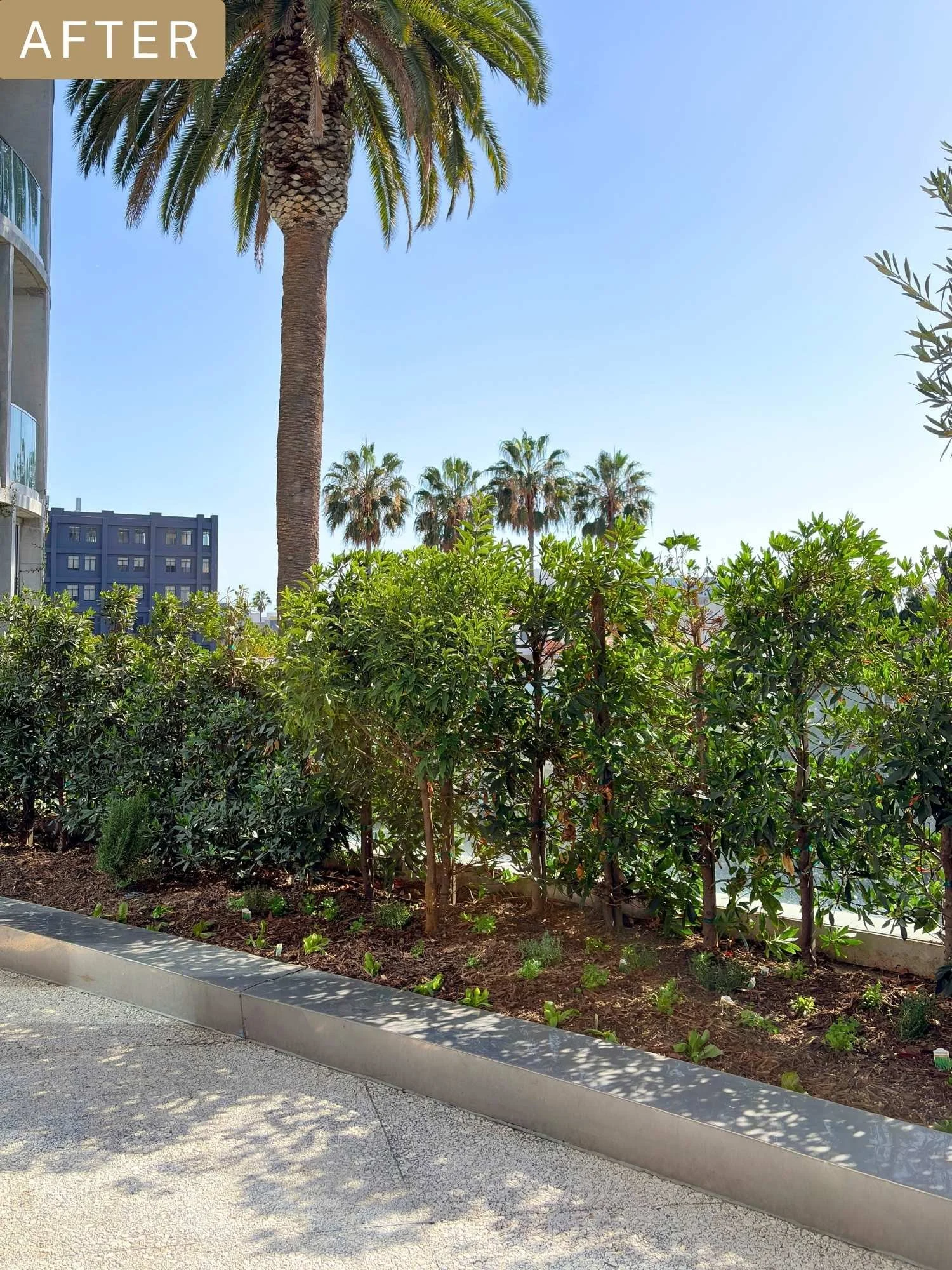
To reach the best version, we ensured every plant had a clear purpose: feeding the kitchen and bar, nourishing pollinators, or naturally repelling insects that eat crops. To make room, we transplanted or composted the less functional residents.
What if an edible garden isn’t right for your property?
Focus on native and climate-adapted species that thrive in the local environment while adding year-round visual impact. Every leaf sequesters carbon from the air, and deep-rooted plants build soil health, creating a lush, low-maintenance aesthetic without attracting unwanted pests.
Plant what the chef cooks
The wishlist came from Executive Chef Jamaal Taherzadeh who is an advocate for using entire plants including stems and bolting flowers.
We matched herbs, salad greens, vegetables, and fruit to existing menu dishes focusing on a few crops in generous quantities so the kitchen can actually depend on using them. We also selected ones that can be cut and grown again to keep a rolling supply of garnishes.
To help the F&B team, I provided a projected harvest calendar with fun facts about each new plant and tips for caring for them. With the unpredictable weather we’re having here lately, plus being a new garden bed, it means some of these might be an experiment and we will see how they do as the season unfolds.
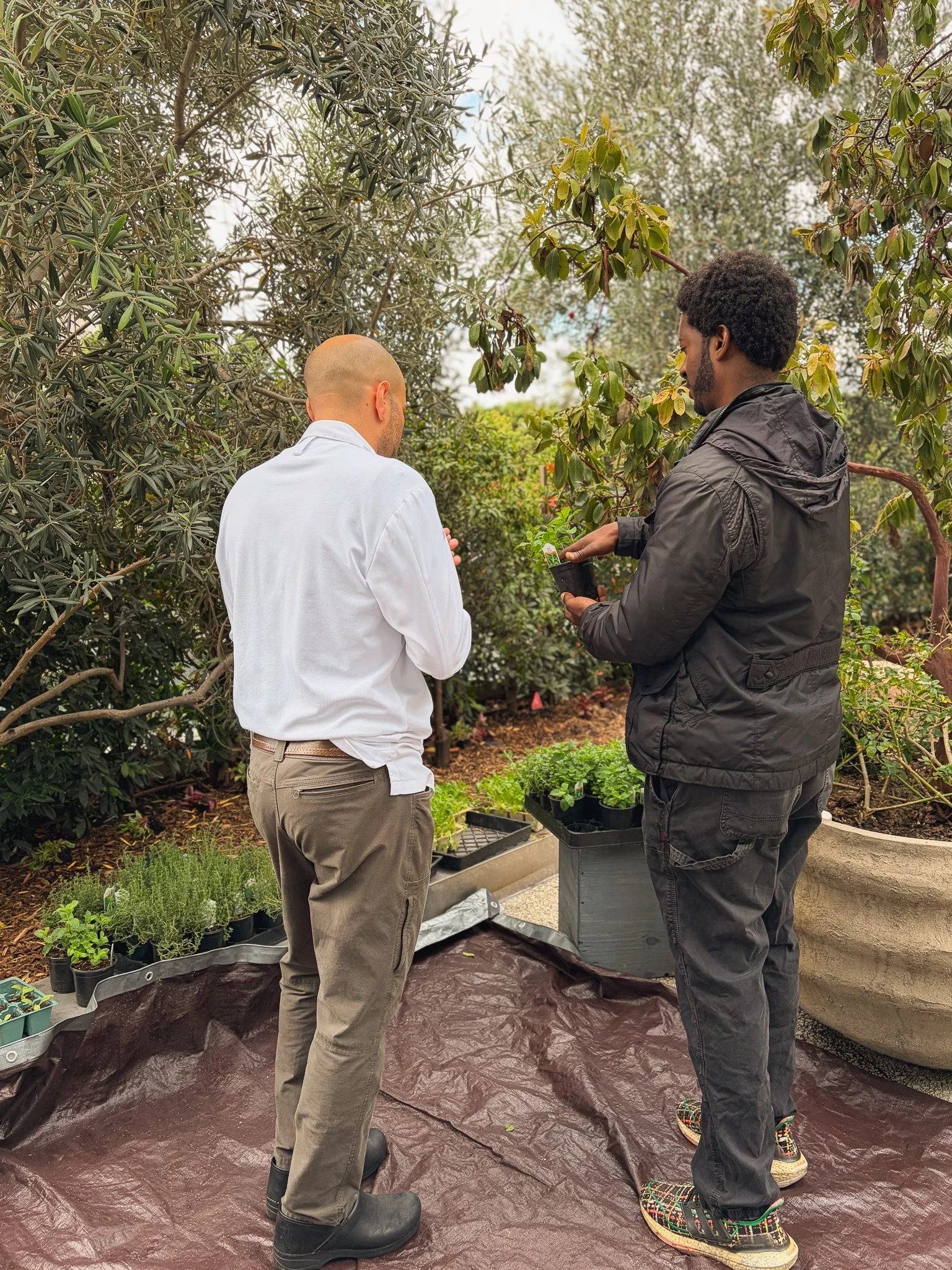
Partner with an urban farmer
We collaborated with Crop Swap LA, a nonprofit dedicated to growing nutrient-rich food in unused spaces. They sourced the specific varieties requested, based on the season and microclimate, and prepared the bed with rich compost to support this project’s success.
Crop Swap also hosts a weekly market stand in Leimert Park.
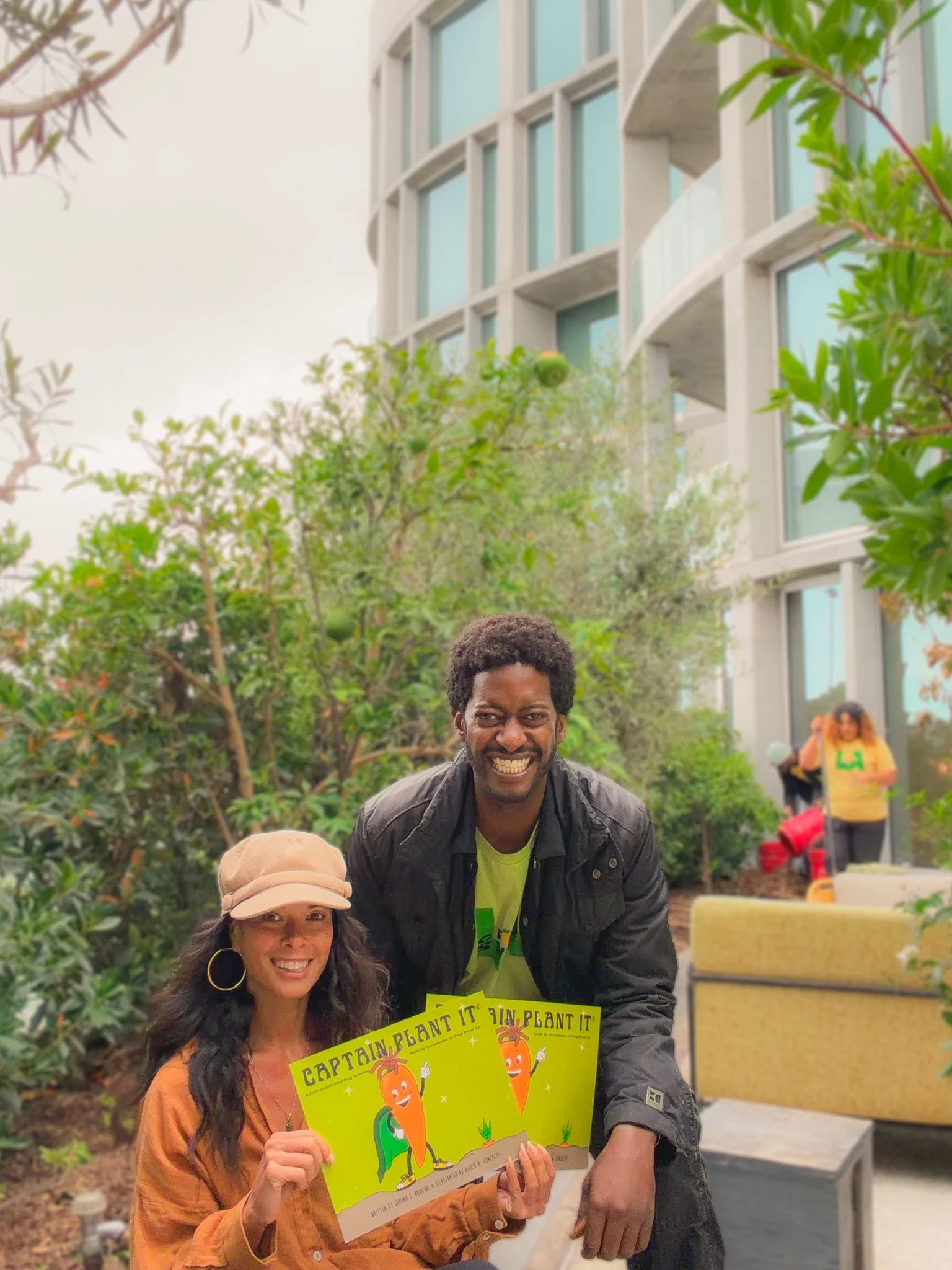
Jennifer Lo (goldenco) and Jamiah Hargins (Crop Swap LA) with his kids illustration book.
Program the garden!
A garden gives a hotel new types of events, buzzing content, and if you’re creative, new revenue.
One format is sponsorship. Say a beverage company adopts a planter and grows mint for a featured cocktail. Guests see and smell the herb on the terrace, taste it in the glass, and read where it came from on the menu. Signage on the planter can draw even more attention to the program. If a brand will pay for a billboard, why wouldn’t it sponsor a planter?
This type of experiential marketing also works as a brand activation for strategic partners looking to engage directly with target customers. Whether it’s a workshop, pop-up bar, or sampling of botanical-based consumer packaged goods (CPGs), there’s ample opportunities for outside companies to get involved with programming the garden.
More than ever, travelers are looking to spend their budget on authentic local experiences and people are craving more time outdoors. In a city like LA, a garden terrace is the ultimate oasis venue.
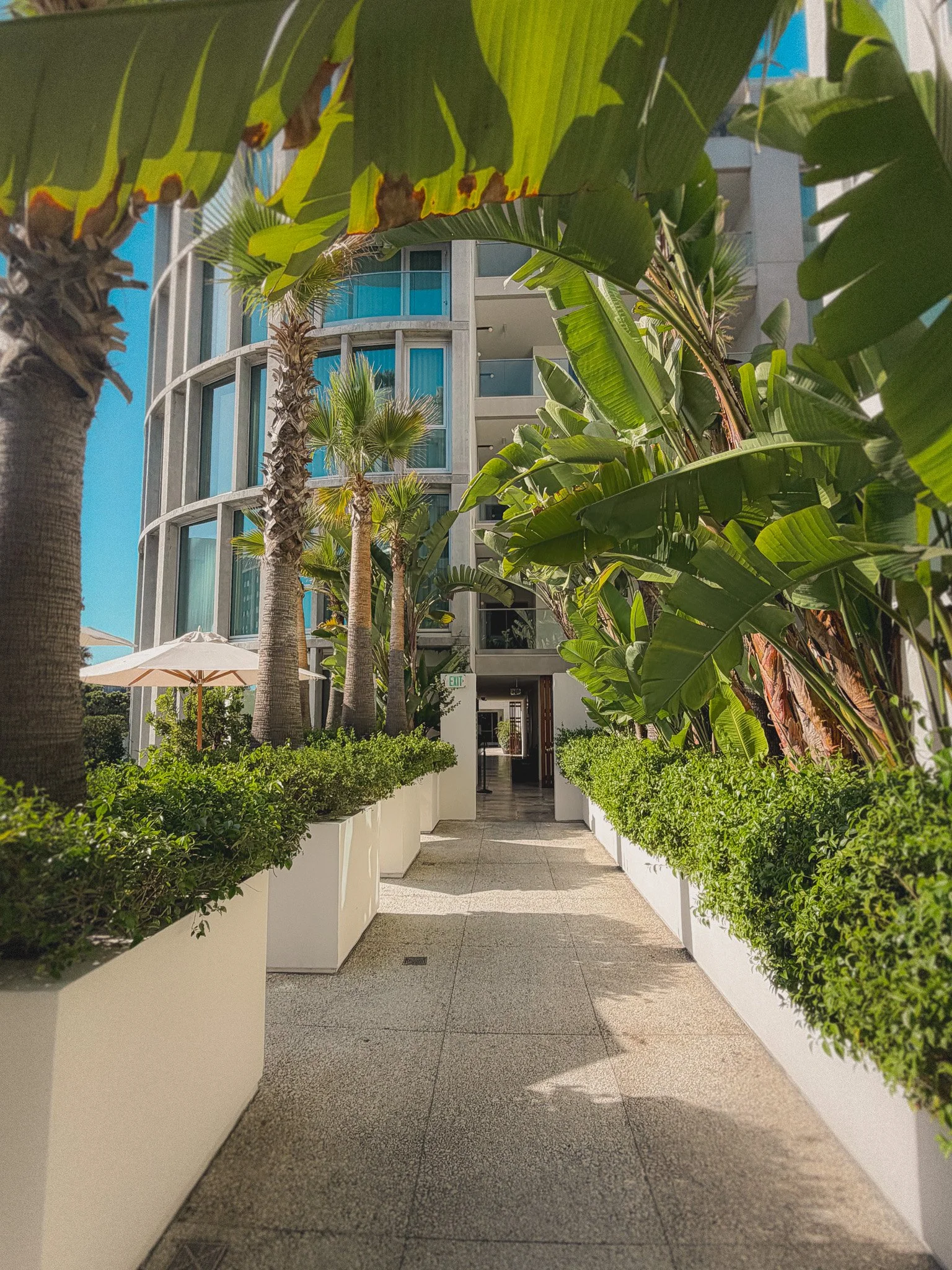
Olea Terrace walkway with garden on left and wellness lounge ahead.
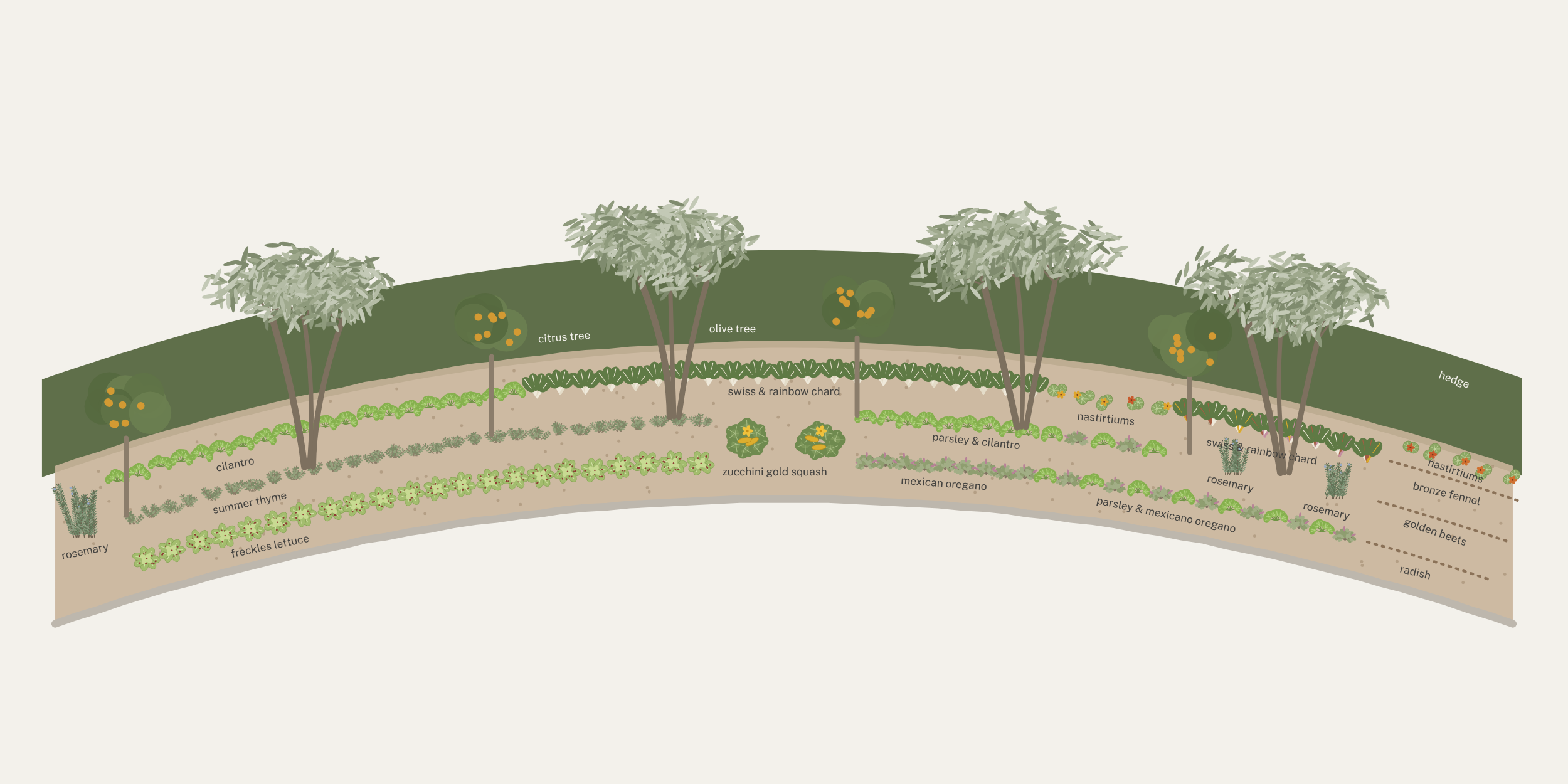
Olea Terrace Garden Bed Map
The 300 ft² garden bed running along the perimeter wall (2nd floor)
Until goldenco has a site,
pop-up experiences and gatherings will be created around the city. This garden installation serves as a model for the value of edible gardens in urban hotel spaces.
If you’re a hotelier and thinking of how to integrate something similar at any scale, I’d love to hear from you.
— Jennifer