
Why third spaces need to step outside.
Hoteliers are focused on third spaces.
Also called third places, these are spots that aren't home or work, it’s where you go to hang out. This year's Boutique & Luxury Lodging Association conference was themed "The Third Space Renaissance” and the industry is calling it: clubification.
Lately it feels like every new opening is a members’ club or has a social wellness amenity. Sauna and cold plunges have become places to meet friends.
The growth of outdoor hotel brands reflects the human need for grounding in nature.
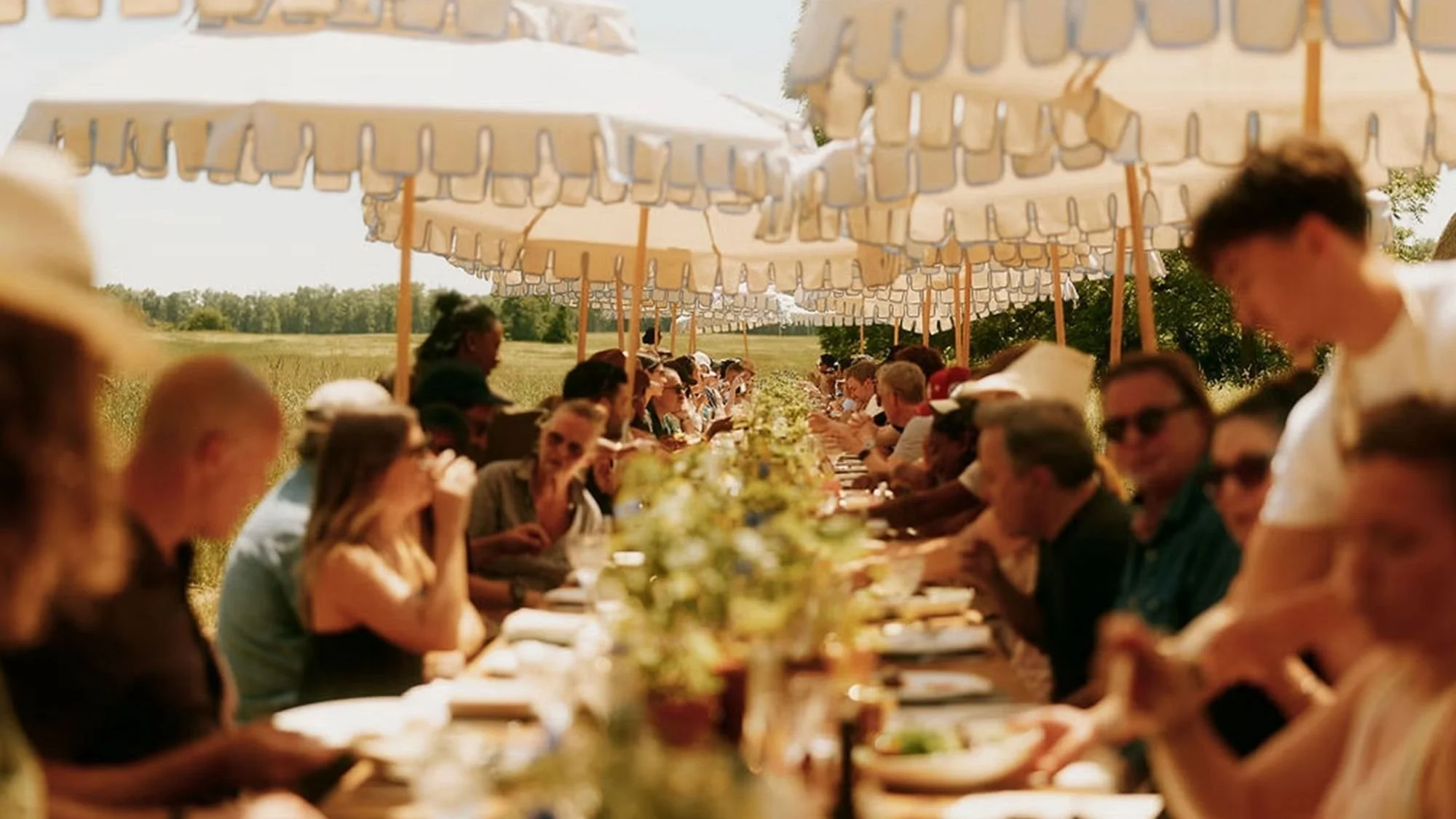
Soho House Farmhouse event in Hudson Valley, New York.
LA’s best asset is underutilized.
Los Angeles averages 300 usable outdoor days a year. Yet most hospitality spaces put their communal areas indoors hidden behind tinted glass or tucked discreetly in the back. The function of placemaking is lost when nobody can see other people… and people are attracted to people.
When neighbors walk or drive by and see people engaging, a space reads as fun, safe, and inviting. If all that life stays indoors, a property looks empty from the street and loses free marketing.
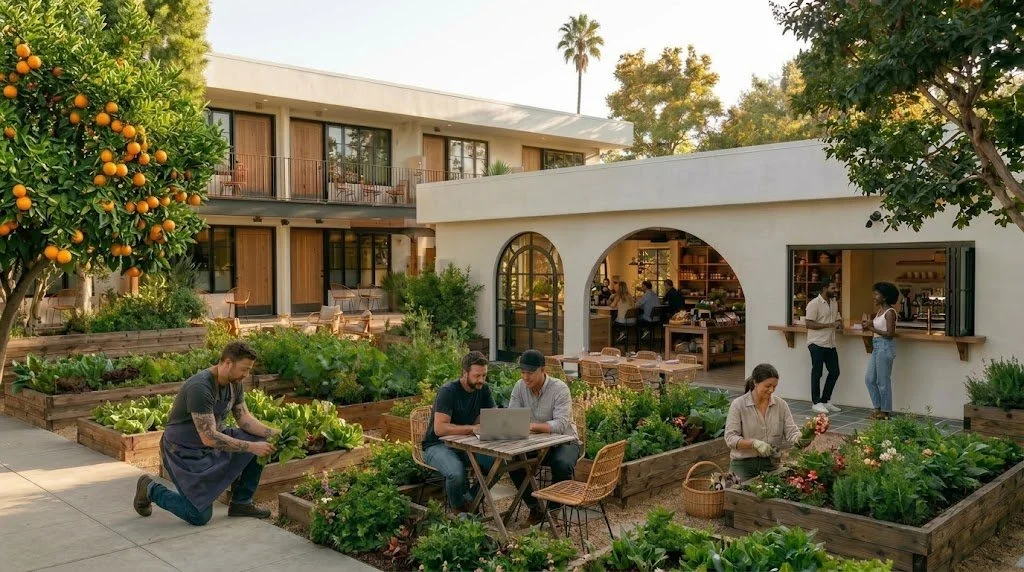
Every ft² has to count in the city.
An urban hotel in the city doesn’t get the acreage that farm, ranch, mountain, and eco-retreat brands enjoy. While LA planning and entitlements often require ground floor open space or setbacks, the real question is, what does that space do all day?
Many properties underutilize their outdoor footprint with boring decks or worse, shrubs. Meanwhile goldenco’s outdoor space becomes a revenue-generating hub with memberships, events, and sponsorships. It happens to cost significantly less per square foot to build and maintain than conditioned interior space, while giving guests exciting reasons to keep coming back.
Outdoor programming > passive patios.
When I walk past a hotel patio in the afternoon, I usually see lounge chairs with few people sitting in them. Furniture makes a space usable, but people show up for what's happening there, and most hotel patios only get lively around brunch and happy hour.
At goldenco, the outdoors are multifunctional and stay busy because guests and members also self-program. When you come by for a morning latte you might notice a bartender harvesting mint, a neighbor arranging florals to be sold, or someone filming themselves garnish their plate with rosemary sprigs. Members who choose goldenco as their third space enjoy being part of what’s around them.
The demo kitchen.
At a dinner party, people naturally congregate in the kitchen because that’s where the consumption and conversations live. goldenco puts the demo kitchen right next to the garden so people can flow between the two and linger.
It's a beautiful, fully equipped kitchen that members can book for their own classes, tastings and events, and they sell tickets to their own following, which brings new people to the hotel
Being outside feels better.
During my time at Gaia Development, a sustainable building consultancy, we talked a lot about how buildings affect human health and wellbeing.
The world’s most popular building frameworks share common features such as biophilic design—which includes natural daylight, fresh air, views of greenery, and living plants. When people feel connected to their environment, they naturally feel energized, productive, and happier.
Just look at where people go when they need a dose of restoration: they drive hours out of the city or hop on a plane to find it (as I wrote about in Why I left eco-luxury resorts for the urban built environment).
But why should people have to leave town to access nature-based values? A neighborhood hotel can offer it down the street from where people live.
Major building standards are backed by hard data and evidence.
LEED open space and habitat credits reward developers for dedicated social gathering areas, native plantings, and heat island reduction—which lowers interior cooling loads while keeping guest comfortable.
Similarly, the WELL Building Standard Light & Mind concepts tie natural daylight directly to circadian regulation and stress reduction.
The Living Building Challenge Health + Happiness Petal treats human connection to nature as a non-negotiable physical need.
Neighborhood hotels can offer locals more than just a place to eat & drink.
Rethinking your hotel’s outdoor or ground-floor experience? Considering edible gardens? I’d love to hear what you’re working on. Feel free to reach out.
— Jennifer