
Why I’d build hotels without table service.
LA’s hospitality scene is tragic.
Last year, Los Angeles lost more than 100 restaurants and bars (and 2026 is on the same track). Some of them were places I'd been meaning to visit, had bookmarked in my Google Maps, or planned to return to but never did.
18,700 restaurant jobs were lost between July 2019 and July 2025 and some owners have reported revenue down 35% year over year.² Anyone who has walked down Santa Monica’s Third Street Promenade has felt the eerie vacancy of a ghost town.
Although restaurants have always been a hard business, what's changed is that the people who want to support them can't afford to show up as often.
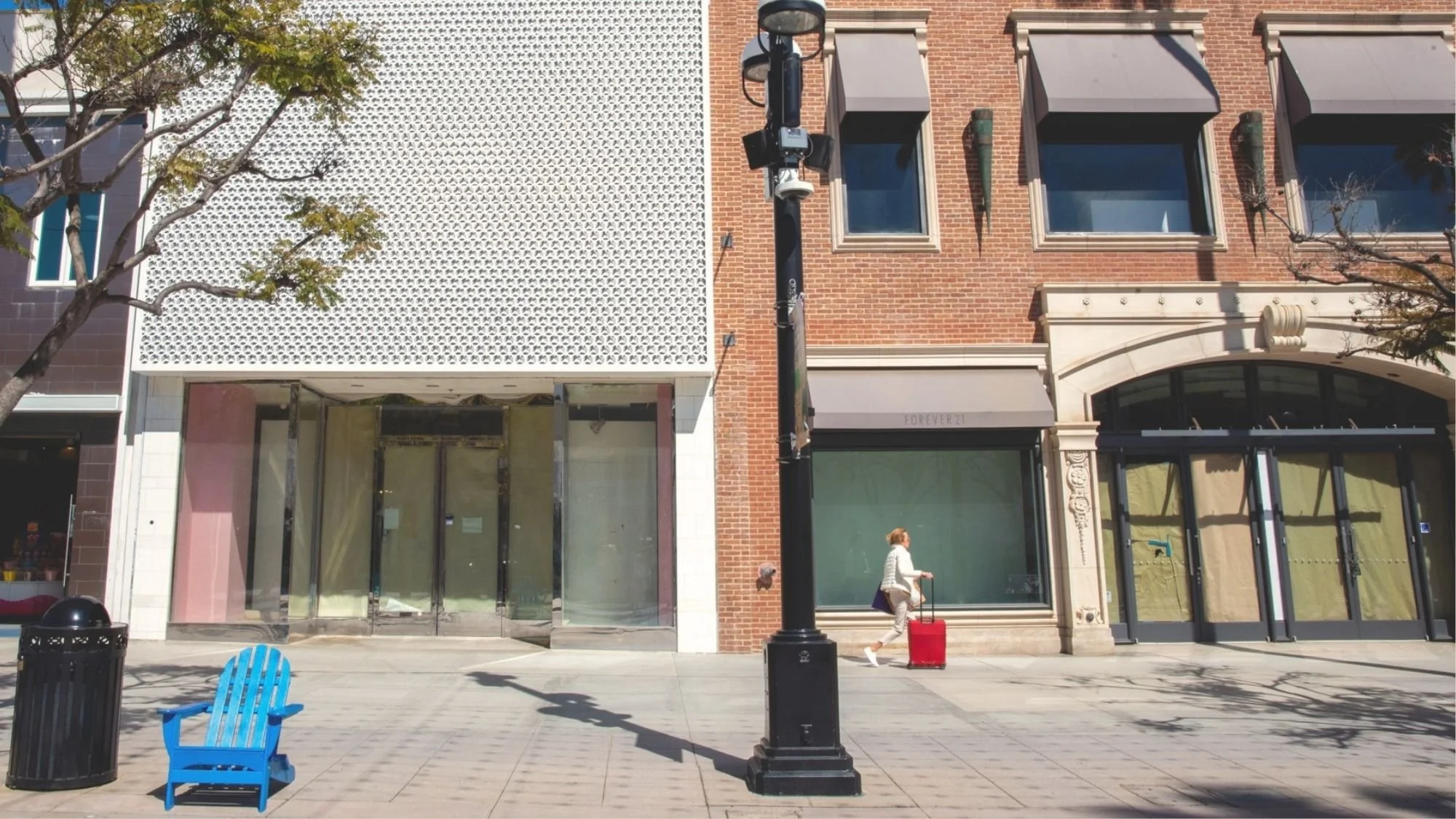
Third Street Promenade, Santa Monica. Vacancy hit 30% this spring.
Why has going out gotten so expensive?
Restaurants sell labor, not just food, which is why menu prices climb faster than groceries and almost everything else. Within a decade (2014-2024), the price of eating out rose almost 50%, while groceries rose about 30% and overall inflation ran 34%.
Rent, insurance, wages, ingredients, supply chain disruptions… whatever an operator absorbs eventually gets passed to the customer. Then add tipping (a whole other conversation) and increasing taxes (due to LA’s Measure ER in effect October 2026). When customers complain about changing menu prices, they don’t often realize they’re buying multiple things on one check.
The city of Santa Monica recently started waiving its wastewater fee for new restaurants, which runs about $1,000 per seat. The city is desperately trying to save itself by putting a price on a seat knowing that each seat carries a fee, a footprint, and the labor to serve it.
Hospitality labor costs more.
Los Angeles passed an ordinance taking hotel and airport workers to $30 an hour. This “Olympic Wage” has been delayed and will now go into effect in 2030 instead of 2028, after City Council voted to slow it down.
To be clear, I’m an advocate for people being paid fairly – I am people after all. And I think models that reduce operational costs help customers continue to dine out, helping businesses stay in business.
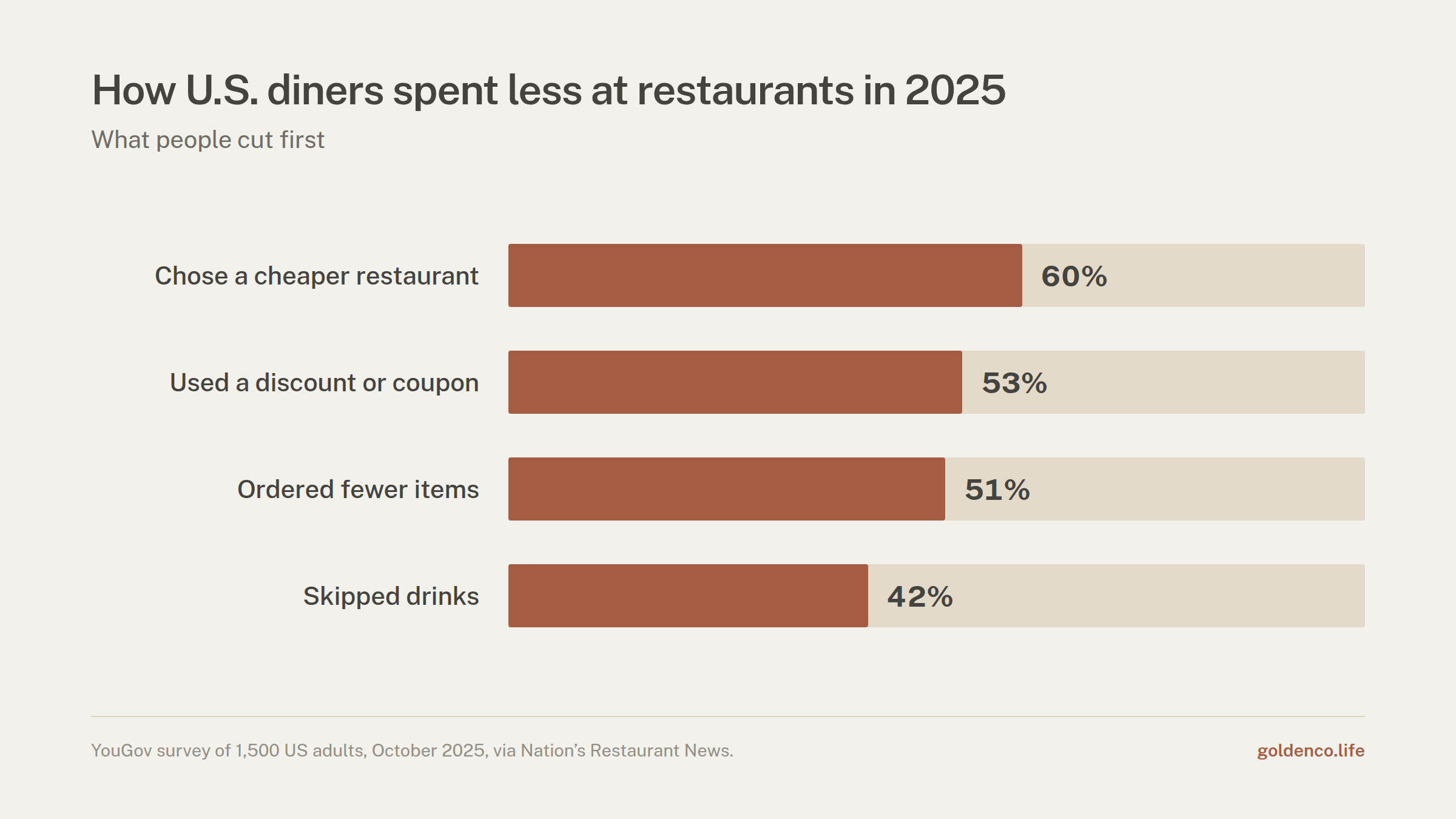
Look at what people do when they want to still go out. They get cheap about it and strip down the experience.
This is less about the restaurant business and more about what happens to a city when the places people used to gather in stop being affordable to gather in.
Society can't afford to not go out.
You've heard the term third place. Not home or work, but where you go to hang out or relax.
The term was coined in the book The Great Good Place by Ray Oldenburg in 1989. Third spaces are not the same as public spaces (like a park), they need regulars, conversation, and people running it.
He argued that a society that loses its third places gets lonelier and less able to govern itself. The book has been republished several times and in 2026, the sequel expands on the importance of the third place as an answer to the loneliness epidemic, political polarization, and even climate resilience.
Loneliness is prevalent even in dense cities, and the pandemic accelerated it by making remote life too convenient. In 2023 the Surgeon General issued a formal advisory on it. People are craving third places but many are priced out of them.
I've always thought hotels should work more like community hubs.
A hotel already has communal spaces, a commercial kitchen, staff around the clock, and overnight guests covering the fixed costs.
Unlike cafés or community centers, a hotel is the one business on the block that can afford to be open all day and provide a place for people to gather, benefitting from human interaction with different cultural backgrounds.
What affordable sociability looks like.
If you’ve been to a tapas bar in Spain you know the model and have experienced the charm.
You walk up, see food prepped in glass display cases, and order while pointing. Someone hands you small dishes and your drink and keeps your tab open so you can keep ordering efficiently. There’s bar stools, lots of standing room with rails on the interior and often exterior walls, and sidewalk tables so you can flow in and out.
Less square footage per person means you end up in conversation with whoever is near you. What I love most is the flexibility of not having to queue at a host stand or make reservations or be confined to one spot.
Because a tapas bar is designed to operate quickly and cost less, people do it multiple times a week— an after work bite, a friend meet-up, or solo. It’s easy for people of all ages and backgrounds to become a regular and frequency is what every restaurant is chasing.
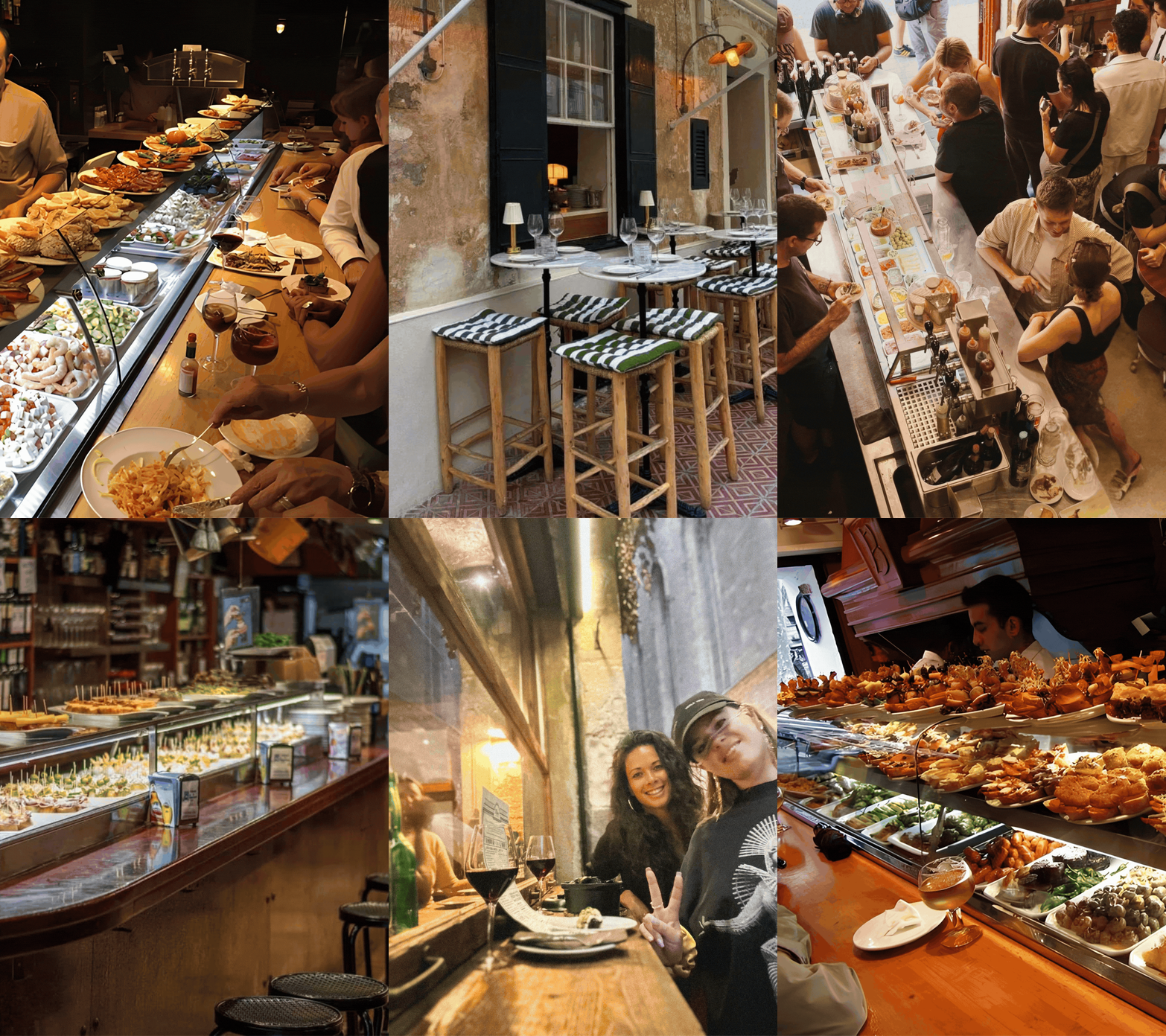
Cafés already do this, sort of.
Every day across America people order at a counter and carry their own drink and food to their seat. Display-led ordering (like baked goods in a coffee shop) removes ticketing and expediting time, and nobody feels underserved. So why does this model stop at breakfast?
Where labor can be redirected.
Moving away from table service eliminates the biggest margin-killer in traditional F&B: paying a multi-tiered floor staff—hosts, servers, bussers, and runners—to execute low-yield mechanical tasks or stand by during slow shifts. Instead, resources are reallocated toward more valuable uses across the property.
A high-volume beverage bar equally adept at creating botanical zero-proofs as traditional cocktails, becomes the primary F&B engine, designed for speed and guest flow without table service bottlenecks.
Meanwhile, hosts are freed from the podium to become true community concierges—building relationships, hosting chef pop-ups, managing brand collaborations, and programming events that keep the property activated year-round.
Cultivating food culture and community.
Rather than treating outdoor space as a passive patio, the goldenco model turns green space into an operational micro-amenity centered on urban agriculture and guest participation.
Guided by an on-site urban farmer who doubles as an educator, the edible garden supplies fresh ingredients directly to the kitchen while hosting interactive workshops for guests.
The garden also operates as a recurring business model: local residents can purchase memberships to tend dedicated beds, while mission-aligned brands sponsor them.
Integrated with a curated marketplace featuring local artisan goods and member-made products, the property becomes an active, self-sustaining hub for local food culture.
Over-servicing is failing anyway.
Unless you're at a high-end establishment that genuinely calls for coursing, more service tiers usually means worse service due to structural handoffs.
You ask for a condiment and the busser tells you they’ll find your server. You order plates to share, but they arrive in awkward intervals because the kitchen is firing by traditional course lines. You want to switch seats, but you can’t because that section belongs to someone else. You’re ready to pay and leave, but you wait ten minutes just to catch your server's eye.
Everyone is doing their assigned role, and it’s not their fault, but when a process is divided across too many handoffs, things inevitably go sideways.
Counter service makes sense for hotels.
I won’t pretend the model guarantees anything. Plenty of counter-service restaurants and food halls have shuttered in LA, too. Standalone concepts face relentless rent and overhead that must be paid entirely out of food margins.
But hotels operate under a different real estate equation: F&B shares fixed costs with rooms.
Moreover, lifestyle hotel guests want connected experiences. Nobody checks into a boutique hotel hoping to sit alone at a formal four-top. They come down to be around people and to find something to do. The same goes with neighbors who swinging by casually on a weeknight or booking a workshop over the weekend.
The overlap of both groups engaging in an active, unpretentious shared space is what makes a hotel feel genuinely alive and part of the neighborhood while keeping the property profitable.
Working on a hotel project or rethinking your F&B model? I’m always open to connecting. Feel free to drop me a note.
– Jennifer